Yemen Conducts Asymmetric War Against Saudi Arabia


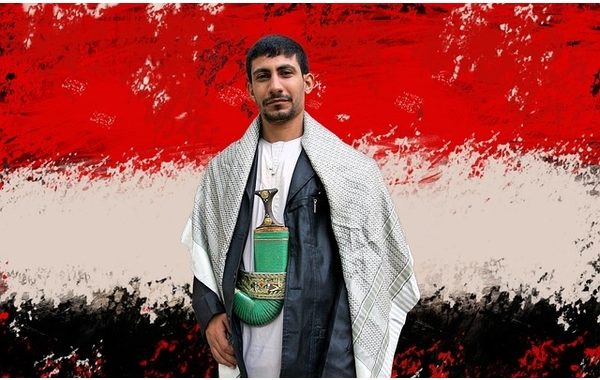
Flag of Yemen

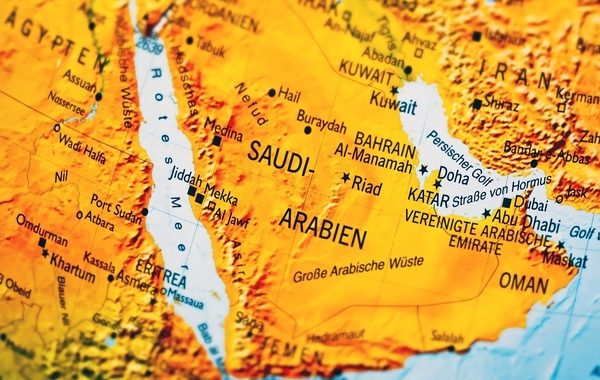
Asymmetric warfare means that the weaker side utilizes unconventional means to combat the superior forces of the enemy. Thus, Yemen is now fighting back against the Saudis. In practical terms, asymmetric warfare means that Yemen can make things difficult for the Saudis to achieve victory.

The Houthis launched a drone assault against the Abha airport in southern Saudi Arabia, and they have targeted the airport with a cruise missile, wounding 26 civilians.

In addition, the Houthis conducted drone attacks on the Aramco East-West pipeline and oil stations deep within the Saudi territory. These attacks demonstrate that the outcome of the conflict is not solely under Saudi control.

Despite the horrors of famine inflicted on Yemen and the thousands of casualties, the Houthis, supported by Iran, are not finished. The outcome of the conflict, even with British and US support for Saudi Arabia, is uncertain.

Iran is thus carrying out their plan for Shia/Iran-supported domination of the Middle East. They are intent in Yemen in their support of the Houthis just as they are in supporting Hezbollah in Lebanon.
Saudi Arabia and Israel Become Friends

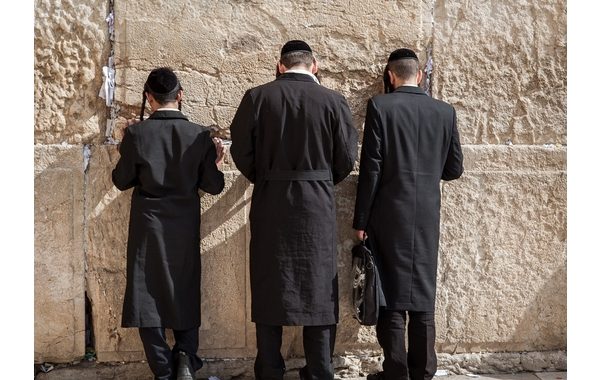
Western-wall


Israel and Saudi Arabia have no formal diplomatic diplomatic relations. But they are becoming closer and closer. The word is out that the two countries are meeting unofficially and frequently. They are discovering their common interests.

And their common interest is their common enemy: Iran. The religious basis of this relationship is that neither Israel or Saudi Arabia are Shia Muslim countries. Israel is, of course, Jewish in religion. Saudi Arabia is Sunni. In reality, Israel is a secular state. Thus, Israel and Saudi Arabia are united against Shia Iran.

Saudi Arabia fears the outreach of Iran into Iraq and the Gulf states. Their greatest concern is that Iran may procure nuclear weapons.

Israel fears the influence of Shia Islam and Iran into Lebanon and Hezbollah.

Thus, we must watch the growing effects of this alliance. The factor preventing any sort of formal diplomatic relationship between Israel and Saudi Arabia is the failure to solve the Palestinian issue. But their alliance could be used as a force to speed the Palestinian peace process.


The Disaster that is Yemen

The Yemen disaster continues. The Saudis and the Houthi representatives appear to agree to a ceasefire, but it this genuine? The Saudis say they support the remnant of the old Hadi government, which has retreated to the southern Yemeni city of Aden.

Meanwhile, the Houthis ask for relief from the bombardment of Hodeidah,  their only effective port city. (I fondly recall swimming on the beach there and sampling the seafood in a shore dinner. But no more of this, probably ever, for me.)

The Houthis also want the airport at Sana’a to be opened, as opposed to the Hadi government desiring Aden to be the country’s main airport.

Are these disagreements resolved? i doubt it. The Saudis, under Mohammed bin Salman, seem to still want blood. And without the help of the Saudis, the Houthis, supported by Iran, will likely emerge.

The UN has stated that the famine in Yemen is the world’s worst in the last 100 years!

And the US has supported the continuation of this man-made disaster.


Contrast: Jordan v. U.S for Acceptance of Refugees

I just returned from a trip to Jordan for medical work with refugees.

Jordan is a Muslim country. The population of Jordan is about 9 million. They have taken in about 800,000 refugees. While the country has had a host of problems, they have weathered onslaught with, for the most part, with no violence.

The US is a “Christian” country. Our population is about 330 million. We have agreed. to take in only about 45,000 refugees per year.  The daily TV news from the President ramps up anti-refugee spirit among our population.

The Khashoggi Thing

By now, it’s clear Jamal Khashoggi is dead. He has been missing for more than two weeks.  And it also seems clear the Saudis were, in some way, responsible. And of the potential guilty parties, Mohammed bin Salman, is the most likely perpetrator. This sort of operation is typical for the Crown Prince. And it is likely his father, King Salman, knew nothing of the operation, which allows him plausible deniability.

What should the US do? This is the problem at hand. Aside from the pricey arms deal, the war in Yemen,  and multilevel business relationships, the real issue is that Saudi Arabia is our essential counterpoint to Iran in the Middle East. We can’t escape this part of the relationship.

While some sanctions or other such punishments may be delivered to save face for the US, we will not walk away from our overall relationship with the Saudis.

Qatar Penalized For Shia Leanings?

Saudi Arabia, Bahrain, and the UAE still persist with  their boycott of Qatar, in effect, making them the outcast of the Gulf.

The stated reason for the boycott of Qatar is that they are operative in causing unrest and interference in the governments of the Gulf. Underlying this reason is Qatar’s supposed positive relationship with Iran.

This continues as Saudi Arabia and the UAE proceed with their war on Yemen, a one-sided war in which only one combatant (the Saudis) has the means to inflict damage on the other. The US supports the Saudi war effort.

At least in part, this face-off is another facet of the age-old Sunni-Shia conflict. For most of its 1400 year history, with only isolated exceptions, this conflict has been relatively minor. There has often been intermarriage between the groups.

The question for our day is whether the present Sunni-Shia strife might erupt into something totally unanticipated

Book Review: The Shia Revival by Vali Nasr

Vali Nasr’s The Shia Revival was first published in 2006 and now in 2016 with an update. In view of the ongoing struggle in the Middle East between Sunni elements in Saudi Arabia and the Shia renewal in Iran/Iraq, the book is timely. The US disengagement in the region has only enhanced the importance of this struggle.

Nasr has laid out the political changes occurring in the Gulf. For centuries Sunnis have lorded it over the Shia, but the power vacuum in the Gulf and the untapped strength of Iran are altering the calculus. The quiet distrust of Khomeini’s cult of the personality is now more evident among Shia intellectuals in the area, and other thinkers have displaced the philosophical ideas promulgated by Khomeini. It has not been possible for the Iranian religious leaders to fend off the wonderful diversity among the people of Iran. Nasr calls the government of Iran “a tired dictatorship.” He notes that Persian is now the third most popular language on the Internet after English and Mandarin.

The Saudis fear a democratic Iran more than they fear a theocratic Iran, and the changes in the direction of democracy persist, though still relatively silent, in today’s Iran. The only force that might disrupt this trend is unwise US intervention.

I recommend Nasr’s thoughtful and beautifully written book to those who want to understand what’s really happening in Iran/Iraq. Daily news on the networks doesn’t help.

Verified by MonsterInsights